How to Measure Your Diamond Size at Home: A Complete Guide
Buying a diamond is exciting, but once the excitement fades, a very real question usually comes up—did I choose the right size?
It’s a common thing, mainly if you're buying diamonds online or thinking about resizing a piece you already own.
The best thing is, measuring diamond size isn’t as complicated as it sounds. You don’t always need special equipment or a visit to the jeweller. With a bit of understanding and a few simple tools, you can get a fairly accurate idea at home.
This guide is written to help you understand diamond size the way jewellers do—clearly, practically, and without unnecessary jargon.
What Does “Diamond Size” Actually Mean?
Most people assume diamond size simply means carat weight. That’s reasonable, but it’s only one thing to say.
In reality, diamond size is influenced by a few different things working together.
Carat: weight tells you how heavy the diamond is. It does not tell you how big it will look once it’s set in a ring.
Dimensions: It includes length, width, depth, and diameter—matter just as much. These measurements, taken in millimeters, decide how much of the diamond you actually see from the top.
Cut and shape: These are where things really change. A well-cut diamond spreads its weight better and reflects light in a way that makes it appear larger. A poorly cut diamond, even at the same carat weight, can look noticeably smaller.
This is why two diamonds with the same carat weight can look very different when worn. It surprises a lot of people the first time they see it.
Common Diamond Shapes and How Their Sizes Are Measured
Not all diamonds behave the same way. Some shapes naturally look larger, while others hide weight underneath. Understanding this makes size measurement far less confusing.
Round Cut Diamond
Round diamonds are the most common choice, mainly because they sparkle so well.
They are measured by their diameter and depth. Since the shape is perfectly round, even a small difference in diameter can change how large the diamond looks. In practice, a well-cut round diamond often appears bigger than expected, even if the carat weight isn’t very high.
Princess Cut Diamond
Princess cut diamonds have a square shape with sharp corners.
They are measured using length × width × depth. These diamonds are usually cut deeper, which means some of the weight sits below the surface. Due to what, a princess cut can look slightly smaller from the top compared to a round diamond of the same carat weight.
Oval Cut Diamond
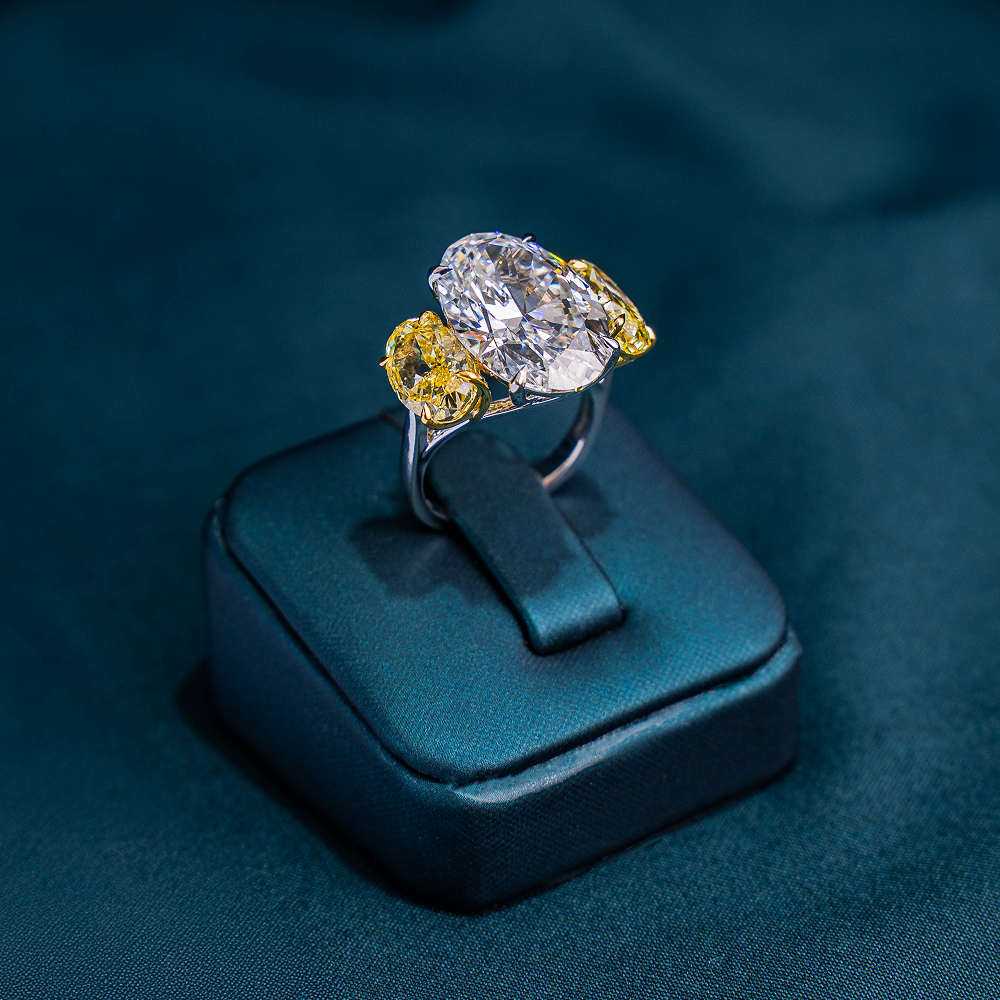
The Oval diamonds are popular but they look elegant and slightly larger than they really are.
They are measured by length and width, and the length-to-width ratio plays a big role. When the proportions are right, an oval diamond can look noticeably bigger than a round diamond with the same weight and also makes fingers look longer.
Cushion Cut Diamond
Cushion cut diamonds have softer corners and a rounded, pillow-like shape.
They are measured by length × width × depth. These diamonds often carry more depth, which means part of the weight is hidden underneath. As a result, cushion cuts sometimes appear smaller than expected if you only look at carat weight.
Emerald Cut Diamond
Emerald cut diamonds are rectangular and known for their clean, elegant look.
They are measured by length and width. Because they have a large flat surface on top, they often appear bigger face-up, but they also make clarity more noticeable. With emerald cuts, proportions matter a lot.
Pear, Marquise & Heart Shapes
These are often called fancy shapes and are measured by length × width.
Their elongated design can make them look larger, but only if the proportions are balanced. Uneven measurements can affect how the diamond sits in a setting, so accuracy is especially important here.
Tools You Can Use to Measure Diamond Size
If you walk into a jewellery store, professionals use precise tools—but at home, you still have options.
Professional tools include digital vernier calipers and diamond gauges, which give the most accurate results.
At home, most people use:
-
A ruler with millimeter markings
-
Measuring tape
-
Printable diamond or ring size charts
-
A strip of paper or string
-
Even smartphone measuring apps (for a rough idea)
They may not be perfect, but they’re usually good enough for understanding size.
How to Measure Diamond Size at Home
Measuring a Loose Diamond
If the diamond is not set, place it on a flat surface.
Measuring the diameter if it’s round, or length and width for different shapes. If possible, measure the depth too. Once you have the numbers, compare them with a standard diamond size chart.
This method gives the most reliable results at home.
Measuring a Diamond Ring
If the diamond is already set, measure the inner diameter of the ring. Make sure you measure from inside edge to inside edge—not the outer edges. Match this measurement with a ring size chart.
This is often how people check size when buying a similar ring again.
Using a Printable Size Guide
Printable guides are simple and surprisingly helpful.
Print the guide at Complete or full scale and then place the ring or diamond over it, and match it with the closest outline or measurement.
String or Paper Method (For Finger Size)
Wrap a string or thin strip of paper around your finger. Mark where it overlaps, then measure the length in millimeters. Convert this using a ring size chart.
One small tip—measure your finger at room temperature. Fingers can swell in heat and shrink in cold.
Why Measuring Diamond Size Properly Matters
Getting the size right isn’t just about looks.
It also helps to avoid resizing it again and again, which makes the ring more comfortable for daily wear, and gives you a better clarity of how the diamond will actually appear once worn. It also makes buying it online less stressful.
Evermore’s Commitment to the Right Fit
At Evermore, diamond sizing isn’t treated as a formality. Every diamond is measured, checked, and reviewed carefully before it reaches you.
Clear measurements, honest guidance, and proper quality checks are part of the process—because a diamond should feel just as right as it looks.
Final Thoughts
Once you understand what diamond size really means, measuring it becomes far less intimidating. With a few tools and a bit of patience, you can confidently check or choose the right size at home.
At Evermore we believe buying a diamond should feel simple, reassuring, and timeless and right from the first measurement.
Because perfection in the end comes down to getting the details right and choosing nothing but special.